Devious Magic

By Robert Plamondon

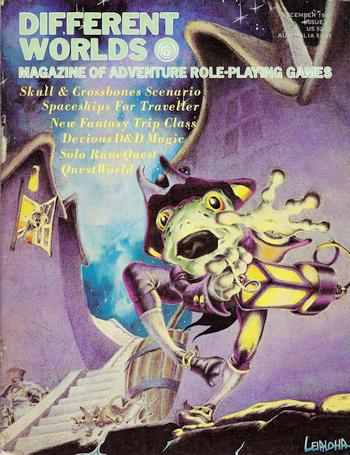
First published in Different Worlds #17, December 1981.

Most players that have played D&D long enough can recite the magic item powers from memory, While 1 have never heard anyone say disgustedly, “Oh, it’s just another Throne of the Gods,” the appearance of an over-familiar magic item may induce terminal boredom in veteran players.
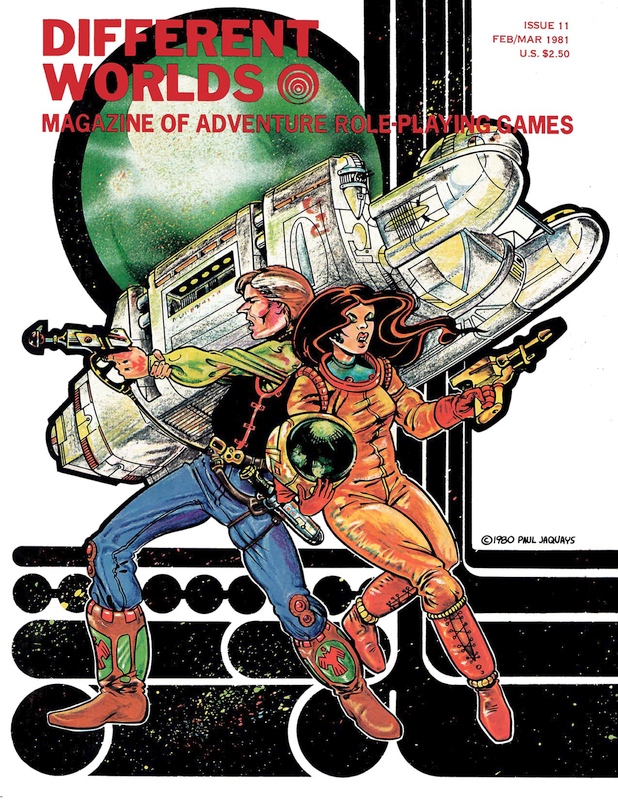
The standard cure for this malady has been to invent new magic items. While this works fairly well, it puts all the burden on an already overworked GM. The search of the clever player to find out every possible application of his magic items’ powers is much more creative. Many magic items and spells have some very powerful applications that never occurred to the game designers. Finding a new use for old magic is as useful as finding new mage and a lot less dangerous.

Read more

Hand-Held Thermonuclear Devices

by Robert Plamondon

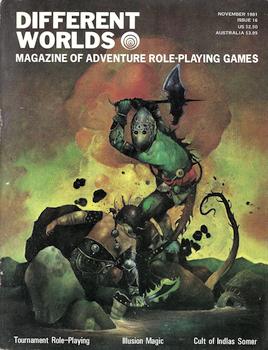
First published in Different Worlds #16, November, 1981.Cover from Different Worlds #16 1981

Players In fantasy role-playing games constantly search for new and more potent weapons. In any long-running campaign, the players will eventually work their characters up in power to a point where they can have just about anything they want. In some campaigns, a preferred weapon by high-level characters is a hand-held nuclear fusion device, called by weapons buffs the “thermonuclear hand grenade” (THG).

This paper discusses the proper role of the thermonuclear hand grenade in a fantasy role-playing setting.

Read more

Running Low-Level Dungeons

By Robert Plamondon

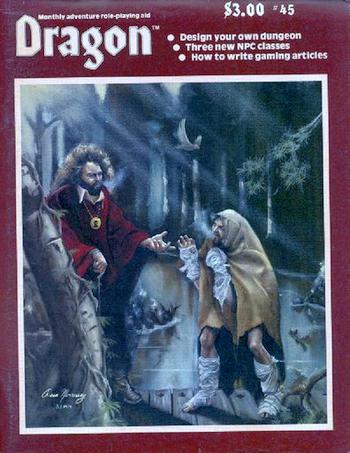
Different Worlds #11, Feb/Mar 1981This article was originally featured in Different Worlds #11 (February/March 1981).
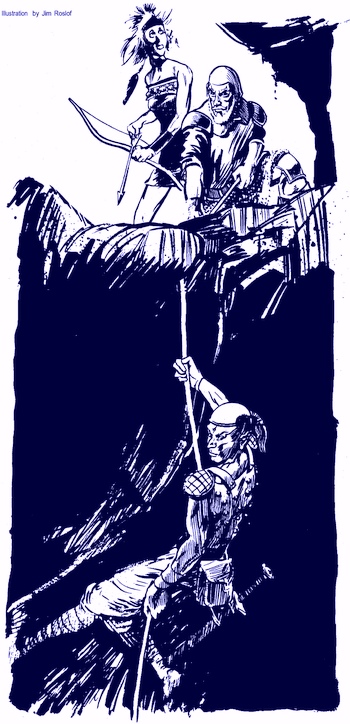
Perhaps the most crucial adventure in fantasy role-playing is the first game, when a novice player with no experience plays a first level character and enters into a dungeon scenario.

In spite of its importance as a means of hooking people on FRP games, the low-level adventure is often casually thrown together by Game Masters because it’s “only first level,” and doesn’t hold his attention the way Asmodeus’ bedroom torture chamber does.

This leads to discouraging or boring first-level dungeons, even when run by competent GMs. To help rectify this problem, I have some suggestions for running a first-level dungeon, which apply equally to all versions of Dungeons & Dragons, and most of the other FRP games as well.

Read more

Give Them Enough Rope!

by Robert Plamondon

Originally published in Dragon Magazine #135, July, 1988.

What Can You Do With Fifty Feet of Rope?

My characters have always used a lot of rope. They’ve used it to build bridges, lower people into chasms, climb mountains, hog-tie orcs, tether mules, and create traps. The creative uses of rope are nearly endless, but most game systems barely mention it. How much does it weigh? How much can it lift? Does it come in decorator colors?
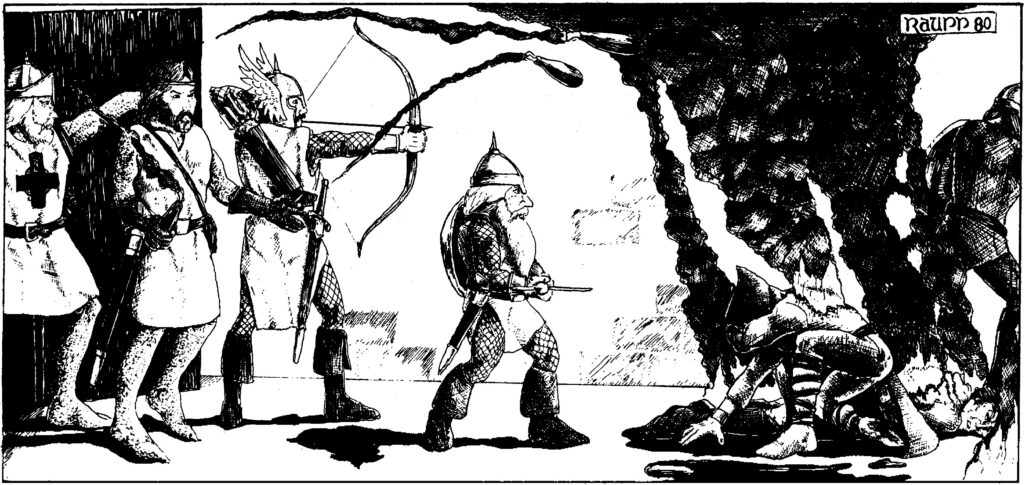
Once, in a Chaosium RuneQuest® campaign that involved looking for a lost city in a big swamp, my character wanted to bring lots and lots of rope—about 1,000′ of it, in fact. RuneQuest gives the weight and breaking strength for rope (AD&D gives nothing but a price). According to the third-edition RuneQuest Gamemaster Book, a 30-meter rope that weighs 6 kg has a strength of 366 kg. Converting this to the D&D game’s standard 50′ rope, that would mean that a 50′ rope would weigh 6.7 lb. and be rated at 805 lb.

That sounds good, except that there are lots of different sizes of rope, and adventurers have uses for many of them. In addition, a quick look at a table of rope strengths would seem to contradict RuneQuest’s numbers. According to Mark’s Handbook,1 standard fiber rope sizes start at 3/16” and go up to 4”. The weight of a 50′ manila rope varies in that range from 12 ounces to 219 pounds! And the breaking strength. varies from 450 lb. to a whopping 105,000 lb. The size closest to RuneQuest’s weight of 6.7 lb. per 50′ is 11/16″ rope, which has a breaking strength of 4,400 lb.

Fiber rope is usually made out of plant fibers; hemp, jute, and manila are the most common. These ropes are cheap, strong, and relatively durable. The biggest problems with rope are rotting and simple wear.

Read more

Don’t Drink That Cocktail—Throw It!

This was my first-ever full-length paid article.

From The Dragon Magazine, Issue #40, August 1980

Don’t Drink That Cocktail—Throw It!

by Robert Plamondon

Festus the Dwarf kicks open the wide door of the bandits’ dun­geon home and throws in two molotov cocktails, burning one of the twelve bandits to death and wounding two more. Right behind come Rangers Smith and Jones and Cleric Lucretia, who each lob two smoking oil flasks. Before the bandits can react, over half receive serious bums and several are dead. The pools of flaming oil prevent them from regrouping. With sword and bow, the invaders pick off the survivors and take the room. None of the adventurers has taken a hit.

Many players, like those mentioned above, have realized that flaming oil is the most powerful weapon available to a low-level player in AD&D. A flask of oil burning on a monster (or player character) does 3-18 points of damage in the space of two rounds and can be used by all character classes except Monks. Compare this to a “paltry” 1-10 points of damage done by each hit of a two-handed sword.

Read more